Pandemic Context
How COVID-19 Exposed Housing Instability in Colorado
Homelessness today is often addressed only at the individual level. This pushes more people into Colorado’s social services system—mental health care, substance use treatment, clothing closets, and food programs. These supports are vital for survival, but they also reveal how fragile our systems became during and after COVID-19.
During the pandemic, delivery services, remote communication, and digital platforms reshaped how people interacted with each other and with government. Emergency rent assistance and federal relief temporarily held up housing stability. When those supports ended after 2023, many Coloradans were left without a safety net.
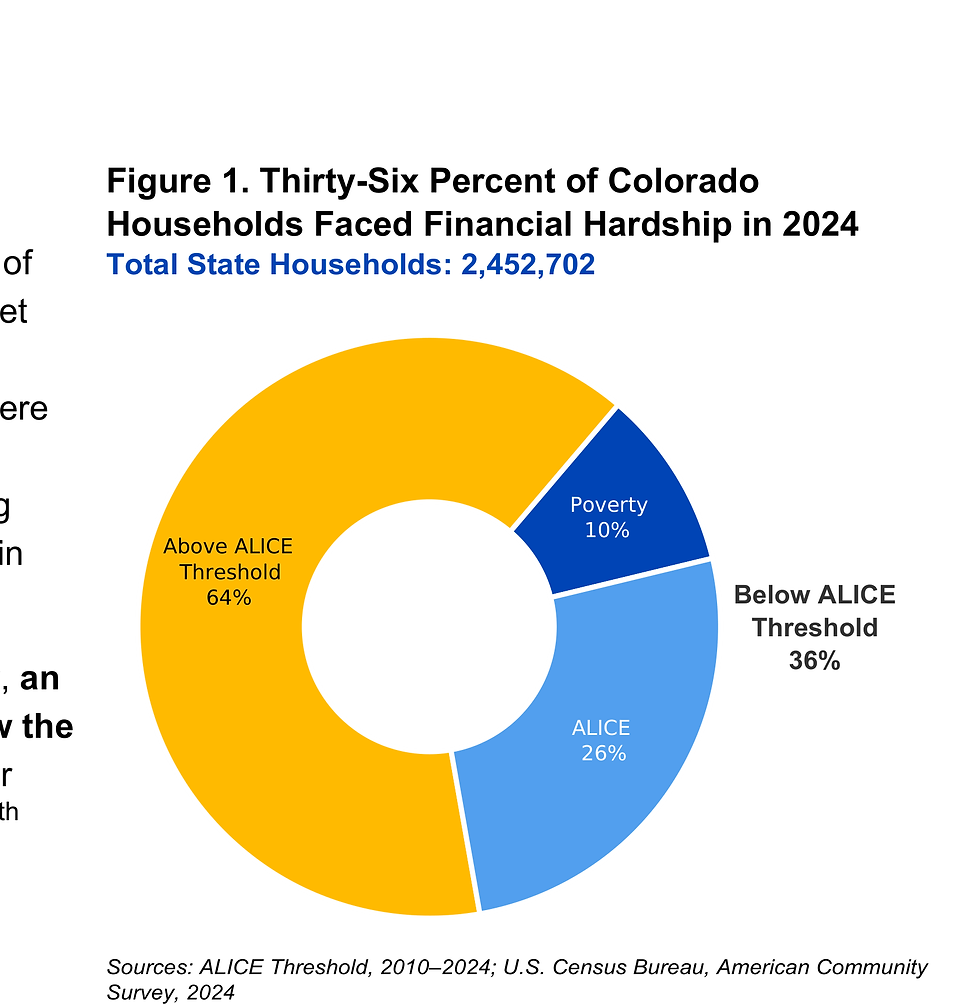
The ALICE (Asset-Limited, Income-Constrained, Employed) standard shows how deep this instability runs. In Colorado, 78% of renters live below the bare minimum cost of safe, basic housing. ALICE estimates a family of four needs about $90,000 a year to meet basic needs, while the federal poverty level is only $30,000. This gap shows how badly federal measures underestimate what Coloradans actually need to live.
At the same time, Colorado’s homeless population is officially reported as growing by about 7% each year. When we pair that with the ALICE data, it suggests that housing insecurity and homelessness are rising faster than our systems can track or respond to. COVID didn’t just harm individuals; it slowed tax revenue while state spending stayed high. By 2026, Colorado faces a $1.5 billion deficit, leading to cuts and shifts in social assistance patterns(4).
Revenue & Resource Shifts
Colorado’s fiscal stability remains heavily dependent on hardship-linked revenue streams, a pattern that the pandemic both exposed and intensified. As economic volatility increased, the state saw a significant shift in how resources were allocated to meet surging demands in social safety nets and emergency health responses. This reliance on volatile revenue sources created a paradox where the systems designed to mitigate hardship were themselves vulnerable to the same economic stressors. The resulting reallocation of funds often prioritized immediate health crises, potentially thinning the resources available for long-term structural improvements in housing and social services(6).

Figure 1.2: Colorado’s State and Local Per Capita Expenditures, Fiscal Year 2022

Health System Stressors
The pandemic significantly intensified existing burdens within Colorado’s mental health and substance use systems. Disruption to community-based care and the isolation of distancing measures likely accelerated the demand for crisis services, exposing a system already strained by high dependency on hardship-linked revenue. These patterns suggest that the external shock of Covid did not create new weaknesses, but rather magnified pre-existing structural vulnerabilities (6).
Analytical data indicates that as private businesses and social services struggled during shutdowns, the public health infrastructure faced a dual pressure: increasing clinical needs and shifting resource allocations. Mental health institutions reported higher acuity in cases, correlating with the broader social and economic instability described in the state's dependency profiles (3).
Homelessness & Housing Strain
Within Colorado’s Housing First model, a hold has been in place since late 2024 on many state, county, and local housing assistance programs. Even when Housing First funding continues, cuts in other areas—like emergency and public services—push the pressure back onto communities.
This creates a cycle: the state depends on social hardship to justify and fund services, while those same hardships drain resources from long-term prosperity systems like education, wage growth, and community development. As the state takes on more responsibilities while carrying a deficit of over a billion dollars, the burden shifts onto taxpayers and local communities.
Homelessness in Colorado is not just a matter of individual choices. It is a result of systemic complacency and dependence on the very harms and services that keep people on the edge. Meeting people’s needs—food, wages, education, and stable housing—requires more than maintaining the current social development foundation. Without legislative and public service changes that shift the culture in our communities, we risk further harm to people, businesses, and the state itself (1).
